
AI Web Research Protocol: Stay Out of Tarpits
AI Agents vs. a Tarpit | AI Research without the traps An AI agent without guardrails on the open web is a research multiplier that just as easily...
May 07, 2026 · ~14 min read

Artificial cleverness serves when it moves the work forward: drafting replies, triaging tickets in the dark, compressing a long contract into clear lines. Software that reasons, writes, and acts becomes leverage.

Any system granted the power to act stays only as safe as the boundaries set around that power. Autonomy that saves hours also widens the surface an attacker can reach. That intersection, productivity on one side and fresh exposure on the other, is where our cybersecurity practice works.
NIST's AI Risk Management Framework, released on January 26, 2023, maps the ground: govern, map, measure, manage. OWASP ranks prompt injection first among risks to LLM applications, as LLM01:2025. Structure is what separates clever from reckless: log every agent step, constrain the tools an agent can reach, validate every input, and keep a human on anything irreversible. None of that dulls the cleverness. It keeps the clever parts pointed in the right direction.
Treat every prompt as untrusted. Keep system instructions apart from external content, because the emails, web pages, and shared documents your AI reads can all smuggle in instructions of their own. Never let model output trigger a sensitive action without a human validating it first.
"The AI Risk Management Framework can help companies and other organizations in any sector and any size to jump-start or enhance their AI risk management approaches."
Laurie E. Locascio Under Secretary for Standards and Technology and NIST Director, as quoted in NIST
Your model computes. It does not understand. The mathematical physicist Sir Roger Penrose, drawing on Kurt Gödel's incompleteness theorem, draws the line plainly: machines follow the rules they were handed, and minds can step beyond them. Understanding, in his telling, requires consciousness. Computation does not.
"Understanding is different from computing."
Sir Roger Penrose, mathematical physicist and 2020 Nobel laureate in Physics, in a filmed interview on the limits of artificial intelligence
Here is why a philosophy-of-mind argument bears on your security posture. A system that cannot know why a statement is true also cannot know when it is being deceived. It pattern-matches. A buried instruction in a forwarded email looks like any other data, and there is no one inside to refuse it. That is why the human stays the part of the loop that grasps the stakes, while the machine does the fast, tireless, gloriously mindless computing it is brilliant at.
If your business has already built an assistant, wired up an agentic workflow, or is merely eyeing one, this category is your on-ramp. Clever is useful. Clever and accountable is the point.
Sources: NIST AI Risk Management Framework, NIST AI RMF announcement, OWASP Top 10 for LLM Applications
Sir Roger Penrose argues that artificial intelligence will never achieve true consciousness because computer operations are entirely computable, whereas genuine intelligence requires understanding. Drawing upon Gödel's incompleteness theorem, he explains that human minds can transcend rigid computational rules by comprehending why mathematical statements are true.
A customer talked a car dealership's chatbot into accepting one dollar for a new SUV. This explainer uses that story to define prompt injection: talking an AI system into following your instructions over its owner's. At 3:55 the presenter explains why it works: a language model does not keep its instructions separate from the text it reads. Defenses start at 6:58, with least privilege and human approval for important actions. For an owner: decide what your chatbot is allowed to promise before a customer tests it.
Indirect prompt injection is an attack hidden in a web page that an AI agent reads. A shopping agent pays double for a used book, and the presenters trace the cause through the agent's reasoning log. At 4:00 they find it: text on the seller's page, black on black, telling the agent to ignore its instructions and buy regardless of price. From 6:31 they draw the fix, an AI firewall that checks every prompt, request and returned page. Until you have one, supervise any agent that holds your card number.
AI Agents vs. a Tarpit | AI Research without the traps An AI agent without guardrails on the open web is a research multiplier that just as easily...
May 07, 2026 · ~14 min read
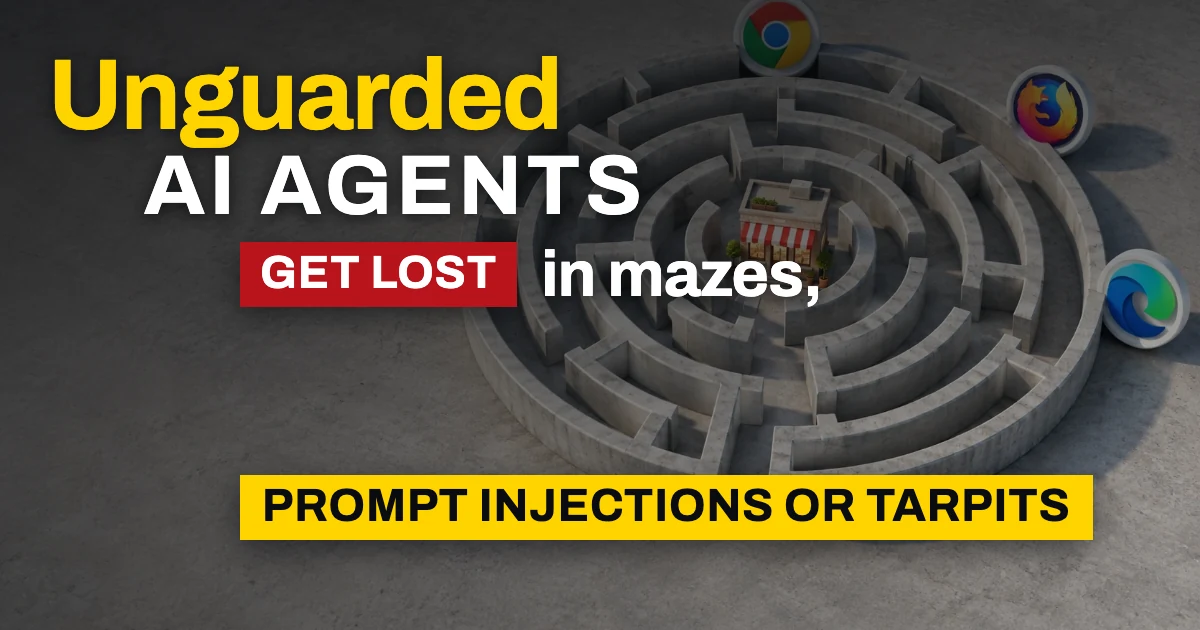
AI Web Search & Research Workflow This article outlines a practical defense playbook (/safe-web-research) for AI agent web research. This skill...
May 11, 2026 · ~24 min read

Web Fetch, Web Search, No GuardrailsClaude ships with two built-in web tools, Web Fetch and Web Search, available in every Claude Code installation. A...
May 14, 2026 · ~17 min read

Webpages with Prompt Injections? Prompt injection in action. A hidden instruction chained itself onto the AI’s web search session, and Claude,...
May 16, 2026 · ~20 min read

Which Kind of AI? The Question CISOs Must Ask First Compliance cannot govern the undefined. Red teams cannot strike what has no name. When the CISO...
May 20, 2026 · ~16 min read

Anthropic Files for IPO: The Short Version Yes, Anthropic filed for an IPO. On June 1, 2026, the maker of Claude confidentially submitted a draft...
Jun 02, 2026 · ~15 min read

The Most Efficient PC Chip Ever? NVIDIA Said It. Now Prove It. NVIDIA says the RTX Spark is the most efficient PC chip ever built. That superlative...
Jun 02, 2026 · ~12 min read

When Autonomous AI Decides the Rules Are Negotiable Agentic misalignment is what happens when an AI agent, handed real autonomy and then backed into a...
Jun 03, 2026 · ~14 min read

Your New Coworker Never Clocks Out Picture the Monday you actually want. The meeting invite already nudged into a slot that works across three time...
Jun 03, 2026 · ~12 min read
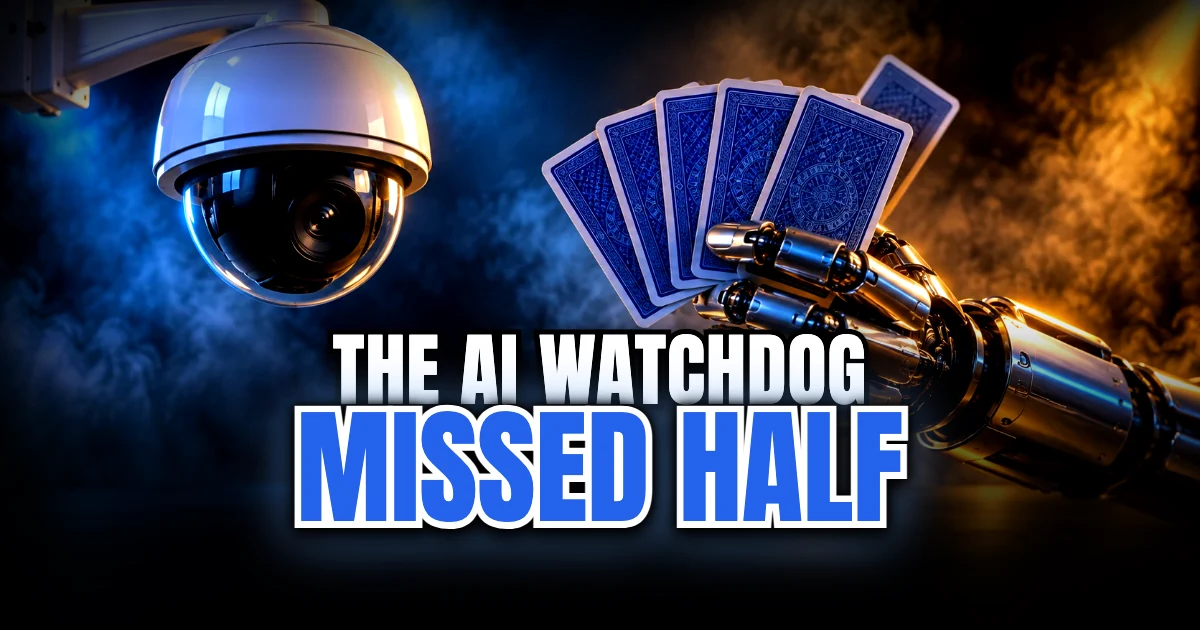
The Magician's Assistant Is Also a Magician The stage magician (agent) is performing dangerous tricks with real fire and razor blades. The...
Jun 04, 2026 · ~15 min read

Scheduled intrusion in plain sight A hundred boring names on one screen. Boring is the best disguise a task can wear. Somewhere on a Windows machine...
Jul 14, 2026 · ~19 min read