- Most projects fail before any code is written. Not because the build was hard, but because nobody wrote down what the site was for.
- Content is the bottleneck, not design. A build waiting on copy stalls, and stalled projects get expensive. Your developer is not a copywriter and cannot read your mind.
- Name the audience out loud. A site for teenagers and a site for corporate buyers share almost nothing except HTML.
- Put the scope in writing. Page count, features, and who produces what. The projects that go sideways nearly all skipped this step.
What Is Your Website Actually For?
Link to section: What Is Your Website Actually For?
Starting a website project without a goal is like building a house without blueprints. You will spend more, wait longer, and end up with something nobody quite asked for. Three questions decide whether the thing succeeds or becomes an expensive apology:
- What problem does this website solve? Brand awareness, revenue, and credibility are three different websites. Pick one to lead with. You can serve the others, but something has to be the point.
- Are you improving a site or starting over? Both are fine. They cost differently and they fail differently, so the answer changes the plan.
- Is your current site broken with nobody left to fix it? Abandonment is far more common than anyone admits at a networking breakfast, and it is usually recoverable.
If you cannot answer the third one, start by measuring what you have. Our free PageSpeed scan takes a minute and tells you, in numbers rather than adjectives, whether you are looking at a tune-up or a teardown.
Why Most Projects Fail Before Any Code Is Written
Link to section: Why Most Projects Fail Before Any Code Is Written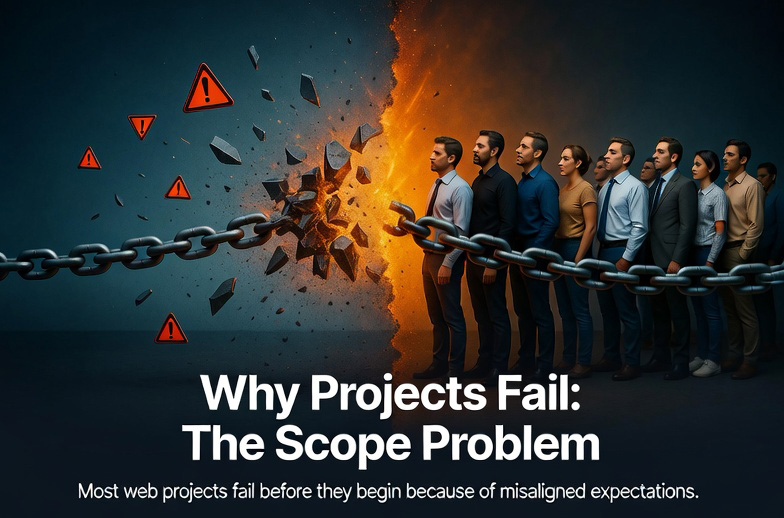
Web projects rarely die of technical causes. They die of misaligned expectations, and the symptoms are boringly consistent: budgets drift, deadlines slip, and both sides start keeping score. Three things prevent almost all of it.
- Know exactly who you are talking to. A site for teenagers looks nothing like one for hospital procurement officers. "Everyone" is not an audience, it is a way of choosing nothing.
- Bring actual content. Not a mood board. Words, in a document, that you would be willing to publish.
- Share the whole history. Including the previous developer who stopped answering emails, and the platform decision you regret. None of that is embarrassing. All of it changes the plan.
The Content Bottleneck Nobody Budgets For
Link to section: The Content Bottleneck Nobody Budgets For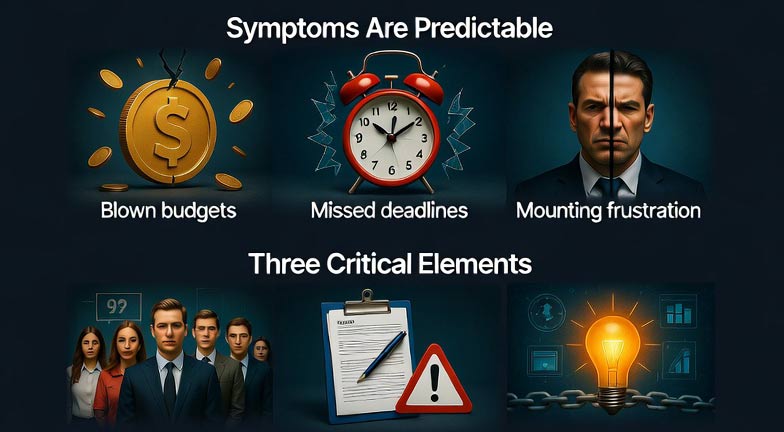
Here is the uncomfortable part: a project waiting on content is a project standing still, and standing still is where budgets go to die. Michelangelo could see the angel in the marble because the vision already existed in his head. Your developer is looking at the same block and waiting for you to describe the angel.
"Make it look professional" is not a brief. It is a hope. Decide what each page has to say and who has to say it, ideally before anyone opens a design tool. Our companion piece on planning website content before design starts walks through doing that page by page.
What Bad URLs and Missing Meta Tags Cost You
Link to section: What Bad URLs and Missing Meta Tags Cost YouYour URLs are quietly costing you clicks. Compare these two:
pcdrama.com/post?asdfasd77783 versus pcdrama.com/web-development
The first tells a visitor nothing and a search engine slightly less. The second says what the page is before anyone commits to a click. Clarity is cheap and it compounds.
Then there are the parts nobody sees and everybody skips: alt text, meta descriptions, title tags, and Open Graph images that decide whether your link looks credible when somebody drops it in a group chat. These are not garnish. They are the difference between being found and being scrolled past. An empty title tag is not a theoretical problem either, and it is exactly the sort of thing that hides in plain sight for years, because the page looks perfectly normal to the one person who never checks: you.
Nobody Visits a Website Nobody Links To
Link to section: Nobody Visits a Website Nobody Links ToLaunching a site with no traffic plan is opening a shop in the desert and wondering about footfall. Links from other sites and social platforms are the roads people arrive on. Every share widens the road slightly. For a local business this is where being local actually pays: the chamber, the supplier you have worked with for nine years, the trade body nobody outside your industry has heard of. Those links are unglamorous and they work.
Structured Data Is How AI Answers Find You
Link to section: Structured Data Is How AI Answers Find YouThe most valuable thing on your website is invisible to humans. Structured data tells machines exactly what a page contains, and the audience for that has grown considerably. It used to buy you rich previews in search results. It now also decides whether an AI assistant can tell somebody what you sell, where you are, and whether you serve their area, or has to guess from your prose and get it wrong.
If a chatbot cannot work out that you build websites for small businesses in Dallas-Fort Worth, it will happily recommend somebody it can work that out about. That is not a hypothetical risk, it is just how retrieval works.
Features Without a Job to Do
Link to section: Features Without a Job to DoA contact form that only collects emails is a missed opportunity wearing a nice border. Every interaction should move the relationship along:
- Does the form trigger a reply that sounds like a person wrote it?
- Do new leads get something genuinely useful, like a guide or a checklist?
- Does follow-up ask a question worth answering, rather than nudging?
- Do you actually need live data, whether that is a ticker or a calculator your industry runs on?
Features without a purpose burn budget quietly. Every one of them should solve a named problem for you or for a visitor.
How to Brief a Developer Without Wasting Money
Link to section: How to Brief a Developer Without Wasting MoneyGood websites are not accidents. They come from clear communication, honest expectations, and a shared understanding of what "done" means. The projects that go well share the same traits every time: content ready up front, goals written down, a specific audience, and an early conversation about what the budget and timeline can genuinely buy.
The most expensive website is not the one with the biggest invoice. It is the one that does not do its job. Whether you are launching a first site, rescuing an abandoned one, or improving something that mostly works, it starts with preparation: bring your content, know your audience, say what you actually want.
Working with a developer nearby helps more than it should, right up until the morning something breaks and you would quite like to speak to a human in your own time zone. We are in Plano and most of the businesses we build for are somewhere around the metroplex. If you are weighing up local options, our guide to website development in Dallas covers what to ask before you sign anything.
- Decide what the website is for before anyone opens a design tool. Awareness, revenue, and credibility are three different sites.
- Write the words first. Content arriving late is the single most expensive thing that happens to a web project.
- Say who you are talking to, specifically. Vague audiences produce vague websites.
- Agree scope in writing, including who is responsible for copy, images, and sign-off.
- Structured data is no longer optional garnish. It is how AI assistants learn what you do and where you do it.
- Be honest about the state of the current site. An abandoned build is recoverable, and pretending otherwise only costs you time.
If you would rather talk it through than read another checklist, our web development service page lays out what we build, how the work runs, and what we need from you before the first commit. You can also scan your current site for free and see exactly what you are starting from.